

When “Good Repairs” Go Wrong: Trapped Moisture in a Cambridge Property
At first glance, the homeowner suspected that the issue might be related to structural cracks caused by historic subsidence. They were understandably concerned that rainwater might be penetrating the walls through these cracks and working its way inside.
However, once we carried out a full inspection of both the interior and exterior of the property, it became clear that the true cause of the dampness was something quite different.

Looking Beyond the Obvious
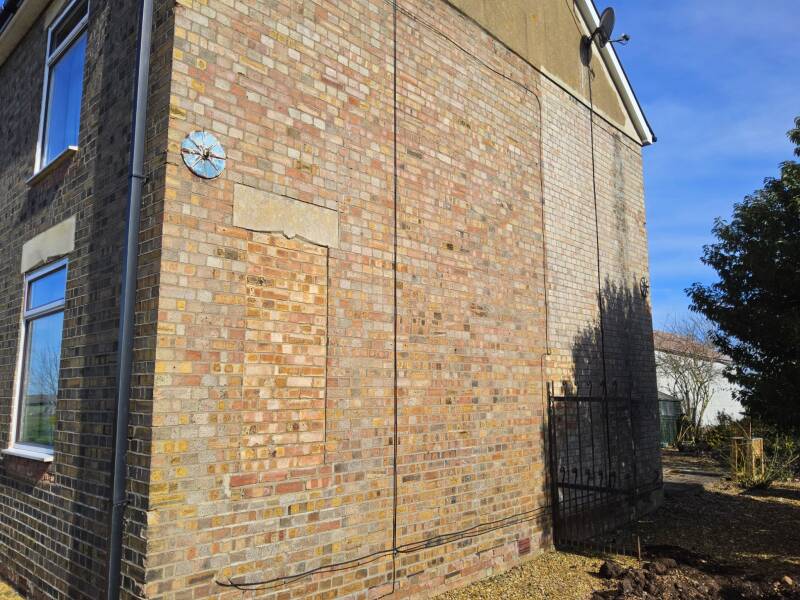
While the cracks were visible externally, they were not the primary cause of the widespread dampness internally. Instead, our inspection revealed that the external brickwork had previously been raked out and repointed using a hard sand and cement mortar.
This is a very common issue we encounter in older properties.
Originally, houses of this age would almost certainly have been constructed using lime mortar, which behaves very differently to modern cement-based materials.
Why Lime Mortar Matters
Lime mortar is a breathable material. It allows moisture that naturally enters the wall through rain, humidity, or ground moisture to evaporate back out through the mortar joints.
In simple terms, the mortar acts as the “breathing point” of the wall.
When lime mortar is replaced with a hard sand and cement mix, two important things happen:
-
The mortar becomes far less permeable, preventing moisture from escaping through the joints.
-
The bricks themselves become the weakest point in the wall, forcing moisture to travel through the brick faces instead.
The result is that moisture becomes trapped within the wall structure.
The Effect Inside the Property
When moisture cannot escape externally, it often migrates inward instead. This can lead to:
-
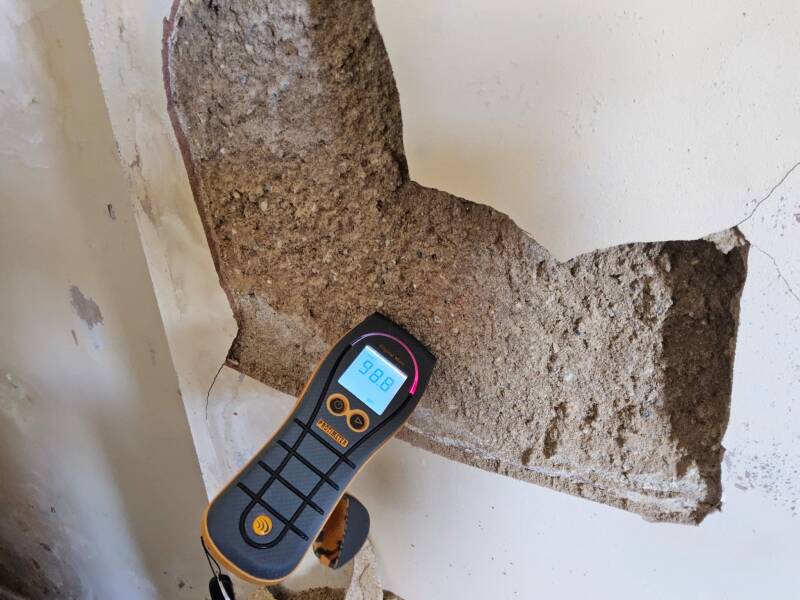
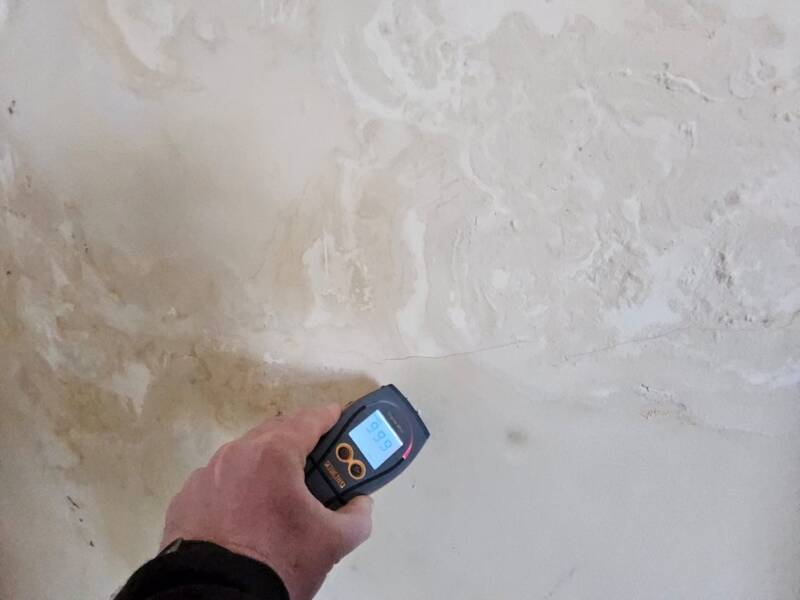
Damp patches appearing internally at full wall height
-
Plaster deterioration
-
Cold and humid internal surfaces
-
Increased risk of condensation and mould growth
In the Cambridge property, the cement pointing was effectively sealing the wall externally, preventing it from drying naturally. Over time, this caused moisture to accumulate within the masonry and present internally as widespread dampness.
Why This Is a Common Problem
Many repointing jobs carried out during the 1970s–2000s used sand and cement mortars because they were seen as stronger and more durable. Unfortunately, when used on older buildings designed to breathe, these materials can create long-term moisture problems rather than solve them.
The Key Takeaway
Not all damp issues are caused by water getting into a building. In many cases, the real problem is moisture that cannot get back out.
Older properties rely on breathable materials such as lime mortar to manage moisture naturally. When these are replaced with modern cement-based products, the building’s ability to regulate moisture can be severely compromised.
This is why it is always important to properly diagnose damp problems before carrying out repairs. What might appear to be a structural or penetration issue can sometimes be the result of previous repair work that unintentionally altered how the building performs.